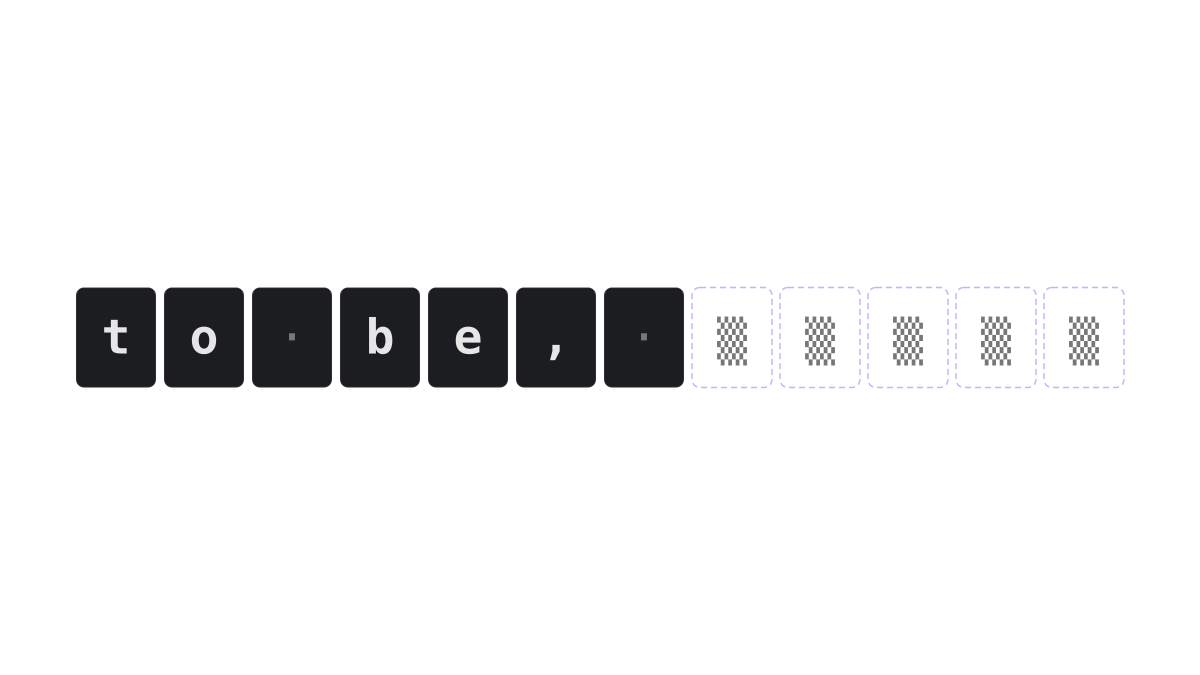
Diffusion language model architecture: masked input tokens through a Transformer to predicted output

Building My Own Diffusion Language Model

To be, fo hend! First her sense ountier to Jupits, be horse. Wise words! This is the results of 2 hours of training my very own PyTorch Diffusion Language Model on an M2 MacBook Air. You can check out the code over at GitHub: github.com/Encrux/simple_dlm Why? Diffusion Language Models are kind of a hot-topic right now in Machine Learning. The basic idea: corrupt some data with noise, then train a model to reverse that corruption over many small steps. ...
April 29, 2026 · 5 min · Daniel Bösch
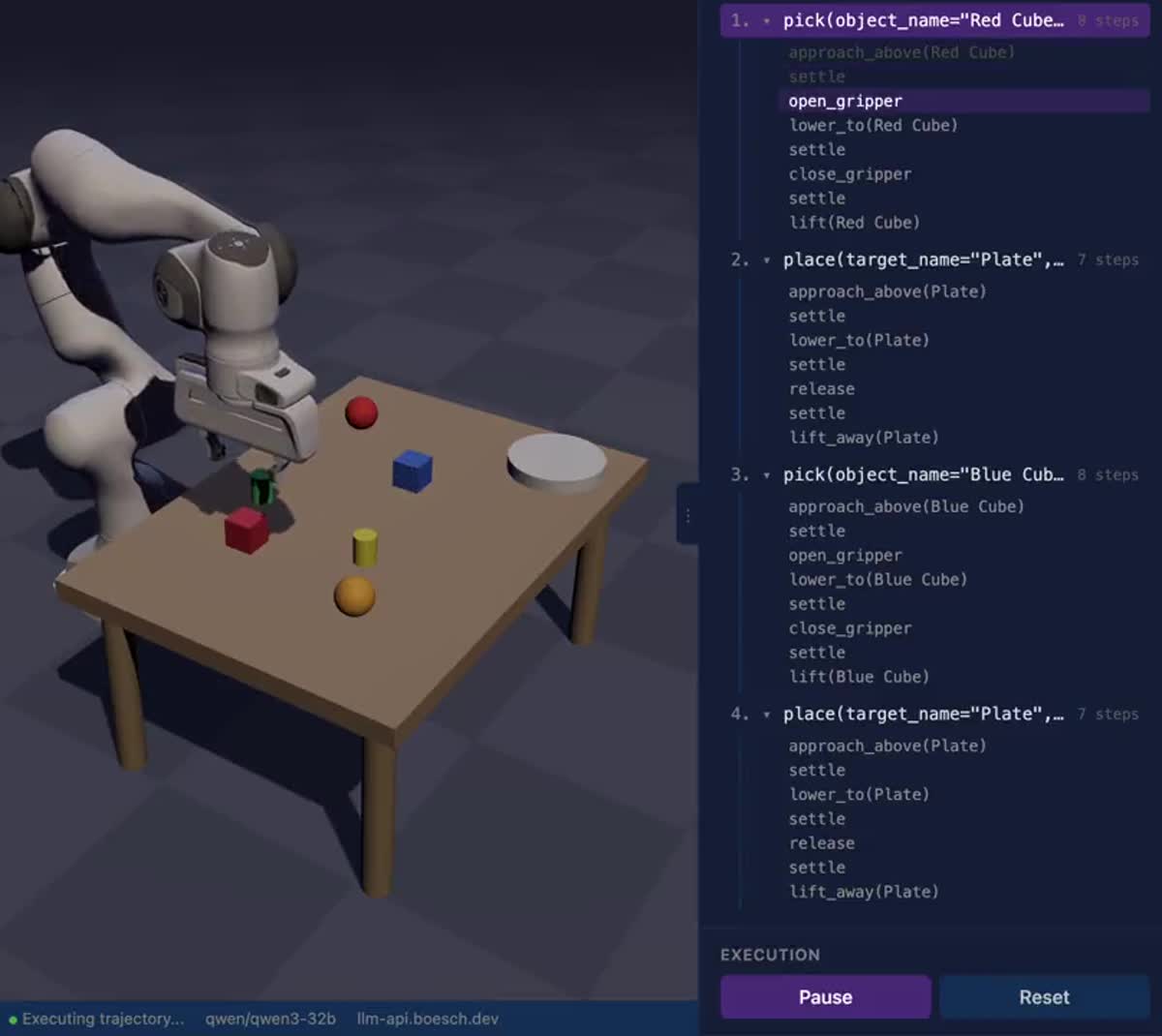
MuJoCo robot arm executing an LLM-generated trajectory on a tabletop scene

What happens when you let an LLM write robot programs?

In 2022 I was tasked with designing an interactive robot system that takes a natural language instruction and outputs a working robot trajectory. This is a write-up of the design decisions and a showcase of a web demo using MuJoCo that. The code in this demo is a rebuild of the original code "Prompt: Put all the cubes on the plate" How can you make robots listen to what a user says? Human-Robot-Interaction (HRI) has come a long way over the last couple of years. Vision-Language-Action Models are the de facto state of the art in robotics research. PhAIL is a leaderboard aimed at measuring real-world performance against humans, which makes it clear that general physical AI is not there yet. ...

April 2, 2026 · 5 min · Daniel Bösch